
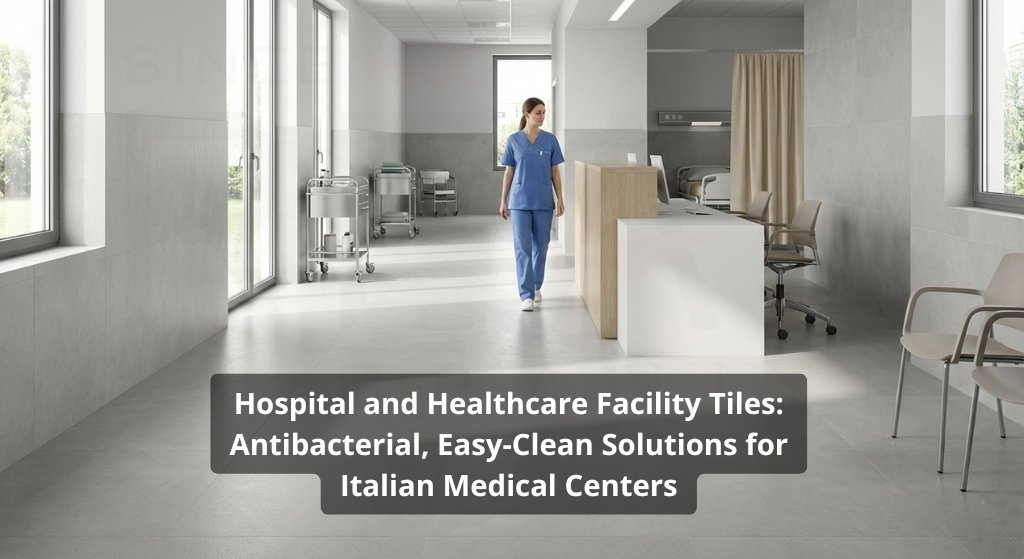
Hospital and Healthcare Facility Tiles: Antibacterial, Easy-Clean Solutions for Italian Medical Centers

Italian healthcare facilities demand the highest standards of hygiene, durability, and safety. When constructing or renovating hospitals, clinics, medical centers, and elderly care facilities, selecting the right wall and flooring tiles is not just about aesthetics—it’s a critical decision that impacts patient safety, infection control, and operational efficiency. This comprehensive guide explores how specialized antibacterial tiles provide Italian medical centers with advanced, easy-clean solutions that meet stringent healthcare standards.
Why Healthcare Facilities Require Specialized Tiles
Healthcare environments face unique challenges that standard tiles cannot address. From high foot traffic and heavy medical equipment to frequent exposure to harsh cleaning chemicals and biological contaminants, hospital tiles must perform under demanding conditions. Italian medical centers are increasingly investing in premium antibacterial hospital tiles that combine cutting-edge technology with proven durability.
The global healthcare buildings market is experiencing robust growth, with Italy’s healthcare real estate sector valued at USD 36.5 billion in 2024 and projected to reach USD 60.5 billion by 2030. This expansion drives demand for advanced construction materials, particularly tiles that meet healthcare-specific requirements for operating rooms, patient wards, laboratories, and rehabilitation facilities.
Essential Features of Hospital-Grade Tiles
1. Antibacterial Protection Technology
Modern antibacterial tiles utilize advanced surface treatments that actively eliminate bacteria, viruses, and fungi. Unlike traditional tiles that merely provide a cleanable surface, antibacterial porcelain tiles incorporate silver ions or photocatalytic coatings that destroy pathogens on contact. This technology is particularly crucial in Italian healthcare facilities where infection control remains a top priority.
Premium manufacturers employ glazing processes that integrate antibacterial agents directly into the tile surface, ensuring permanent protection that won’t wear off over time. These surfaces have been proven effective against common healthcare-associated infection pathogens, including antibiotic-resistant strains like MRSA, making them ideal for intensive care units, surgical theaters, and isolation rooms.
2. Superior Cleanability and Maintenance
Healthcare tiles must withstand daily cleaning with industrial-strength disinfectants without degrading or losing their protective properties. High-quality porcelain tiles for hospitals feature extremely low porosity rates—often below 0.5% water absorption—which prevents liquids, stains, and bacteria from penetrating the surface.
This non-porous characteristic ensures that even after years of rigorous cleaning protocols, the tiles maintain their antibacterial effectiveness and visual appearance. For Italian facility managers facing tight budgets and staffing constraints, easy-clean tiles significantly reduce maintenance costs while maintaining the highest hygiene standards.
3. Anti-Slip Safety Standards
Patient and staff safety depends on proper traction, especially in areas prone to moisture such as bathrooms, treatment rooms, and corridors. Professional hospital tiles meet strict anti-slip certifications, including R10-R11 ratings for floor surfaces and DIN 51097 classifications for wet areas.
Textured surfaces provide enhanced grip without compromising cleanability—a critical balance for healthcare environments. Large-scale construction firms and architects specifying tiles for Italian medical centers prioritize anti-slip performance to minimize accident liability while ensuring compliance with healthcare building regulations.
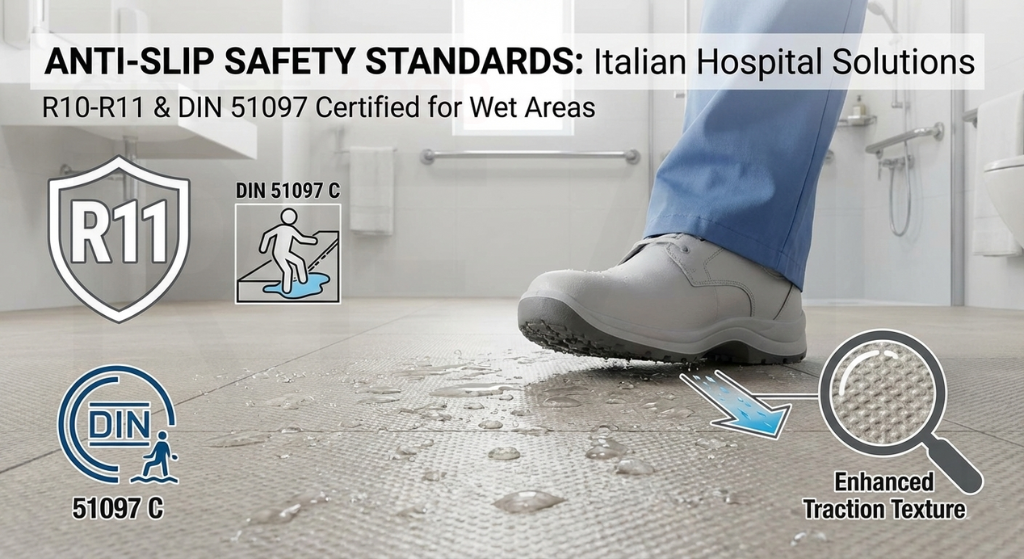
Table of Contents
Optimal Tile Applications Across Healthcare Facilities
Operating Rooms and Surgical Suites
Operating theaters require the most stringent tile specifications. Seamless, large-format tiles minimize grout lines where bacteria could accumulate, while chemically resistant surfaces withstand repeated sterilization procedures. Antibacterial wall and floor tiles create a fully protected environment where contamination risks are minimized.
Many Italian hospitals are upgrading to 60x120cm or larger format tiles that reduce installation time and provide a modern, cohesive aesthetic. The smooth, glossy finish of surgical-grade porcelain tiles reflects light efficiently, contributing to the bright, sterile atmosphere essential for precision medical procedures.
Patient Rooms and Recovery Wards
Patient comfort and healing environments require tiles that balance functionality with warmth. Soft, neutral colors in ceramic and porcelain tiles create calming spaces while maintaining all necessary hygiene properties. Antibacterial floor tiles in patient rooms prevent cross-contamination while withstanding the movement of beds, wheelchairs, and medical equipment.
Wall tiles in warm, natural tones help reduce the clinical feel of hospital spaces, contributing to patient wellbeing—a design trend increasingly embraced by Italian healthcare architects and interior designers.
Laboratories and Diagnostic Centers
Medical laboratories handle hazardous chemicals, biological samples, and precision equipment requiring specialized flooring solutions. Chemical-resistant porcelain tiles withstand acids, solvents, and reagents common in diagnostic facilities. The exceptional hardness of vitrified tiles prevents damage from dropped instruments while maintaining perfectly level surfaces for sensitive analytical equipment.
Rehabilitation and Physical Therapy Areas
Rehabilitation facilities benefit from tiles with enhanced slip resistance and impact absorption properties. Porcelain tiles designed for healthcare applications provide stable, safe surfaces for patients using walking aids or wheelchairs while maintaining the antibacterial protection essential in all medical environments.
Size Options and Format Versatility
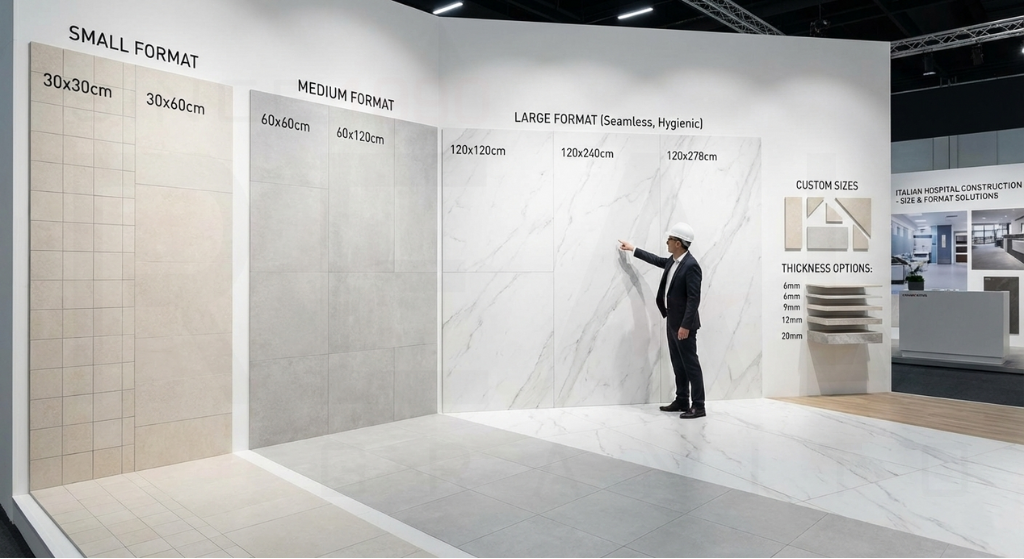
Modern tile manufacturers offer comprehensive size ranges to meet diverse healthcare project requirements. Standard formats include:
· Small format: 30x30cm, 30x60cm for detailed areas and accent walls
· Medium format: 60x60cm, 60x120cm for general flooring and wall applications
· Large format: 120x120cm, 120x240cm, 120x278cm for seamless, grout-minimized installations
· Custom sizes: Project-specific dimensions for unique architectural requirements
Large format tiles are particularly popular in Italian hospital construction projects as they reduce installation time, minimize grout lines, and create contemporary, hygienic spaces. Thickness options ranging from 6mm to 20mm accommodate various structural needs, from lightweight wall cladding to heavy-duty industrial flooring.
Finish Options for Healthcare Environments

Matt Finishes
Matt or honed finishes provide excellent anti-slip properties while maintaining a sophisticated, professional appearance. These surfaces minimize glare—beneficial in brightly lit healthcare environments—and hide minor wear better than polished alternatives. Matt antibacterial tiles are ideal for corridors, public areas, and patient rooms.
Polished Finishes
Glossy, polished porcelain tiles reflect light beautifully and create an impression of cleanliness and modernity. While requiring more careful slip-resistance consideration, polished tiles are excellent for healthcare facility lobbies, administrative areas, and wall applications where their luminous quality enhances architectural design.
Textured and Structured Surfaces
Advanced manufacturing techniques create textured tiles that replicate natural materials like stone or concrete while providing enhanced grip and antibacterial properties. These structured surfaces are particularly effective in rehabilitation areas, physical therapy centers, and outdoor healthcare campus pathways.
Manufacturing Quality and Certification Standards
Reputable tiles manufacturers serving the Italian healthcare market maintain rigorous quality control and international certifications. Key credentials include:
· ISO 9001:2015: Quality management systems certification
· ISO 14001: Environmental management standards
· ISO 13006: International standards for ceramic tiles
· UNI 11021:2002: Antibacterial activity certification
· CE Marking: European conformity for construction products
These certifications provide architects, contractors, and procurement officers with confidence that tiles meet stringent technical specifications and regulatory requirements for healthcare construction projects.
Sustainable Manufacturing Practices
Leading tile manufacturers embrace eco-friendly production methods that align with Italy’s commitment to environmental responsibility and EU Green Deal objectives. Sustainable practices include:
· Energy-efficient kiln technologies reducing carbon emissions
· Recycled water systems minimizing consumption
· Waste heat recovery for facility heating
· Use of recycled materials in tile production
· Solar power integration in manufacturing plants
For construction firms bidding on public healthcare projects, partnering with environmentally certified suppliers strengthens tender proposals and demonstrates corporate sustainability commitments
Working with Tiles Manufacturers: What Italian Buyers Need to Know
Technical Support and Consultation
Professional tile manufacturers provide dedicated technical teams to assist architects and contractors throughout project specification, selection, and installation phases. This support includes:
· CAD drawings and 3D visualization services
· Sample provision for approval processes
· Installation methodology guidance
· Maintenance protocol recommendations
· Post-installation support and warranty coverage
Competitive Pricing for Large Projects
Healthcare construction projects typically involve substantial tile quantities, making manufacturer-direct relationships essential for cost optimization. Reputable suppliers offer:
· Volume discounts for large-scale orders
· Project-specific pricing packages
· Flexible payment terms for construction timelines
· Container-load optimization for international shipping
· Just-in-time delivery coordination
Quality Assurance and Testing
Before committing to large orders, Italian construction firms should verify tile performance through laboratory testing reports covering:
· Breaking strength and load resistance
· Water absorption and porosity measurements
· Chemical resistance to common disinfectants
· Antibacterial efficacy testing
· Slip resistance coefficients
· Thermal shock resistance
Installation Considerations for Healthcare Projects
Proper installation is critical to tile performance in medical environments. Professional contractors specializing in healthcare construction should follow manufacturer guidelines regarding:
· Substrate preparation and waterproofing
· Adhesive selection for healthcare-grade bonding
· Grout specifications (epoxy grouts for enhanced hygiene)
· Expansion joint placement for large format tiles
· Cove base integration for seamless wall-to-floor transitions
Minimizing grout lines through large format tile installation and using antimicrobial grout products further enhances the hygienic properties of healthcare flooring systems.
Cost-Benefit Analysis for Healthcare Administrators
While premium antibacterial tiles represent a higher initial investment than standard ceramic products, the long-term benefits include:
· Reduced cleaning costs: Easy-clean surfaces require less labor and fewer chemical products
· Lower infection rates: Antibacterial protection contributes to patient safety and reduced hospital-acquired infections
· Extended lifespan: Superior durability reduces replacement frequency
· Minimal maintenance: Non-porous surfaces resist staining and damage
· Enhanced facility reputation: Modern, hygienic spaces attract patients and quality medical staff
For facility managers evaluating lifecycle costs, antibacterial porcelain tiles typically achieve payback within 5-7 years through operational savings and enhanced functionality.

Emerging Trends in Italian Healthcare Tile Design
Italian architectural trends are influencing healthcare facility design with emphasis on:
· Biophilic design elements: Natural textures and colors promoting healing environments
· Large format minimalism: Seamless, contemporary spaces with reduced visual clutter
· Color psychology: Strategic use of calming or energizing hues based on facility zones
· Sustainable materials: Eco-certified products supporting green building certifications
· Smart integration: Tiles compatible with underfloor heating and advanced building systems
Leading healthcare architects are specifying tiles that transform clinical spaces into welcoming, patient-centered environments without compromising functionality or hygiene standards.
Choosing the Right Manufacturer Partner
Italian contractors, architects, and healthcare administrators should evaluate potential tile suppliers based on:
1. Product range breadth: Comprehensive options for all healthcare applications
2. Technical expertise: Demonstrated knowledge of healthcare-specific requirements
3. Certification portfolio: Full documentation of quality and performance standards
4. Project experience: Proven track record with similar healthcare facilities
5. Logistical capabilities: Reliable delivery and container coordination for Italian ports
6. Support services: Technical consultation, sampling, and after-sales assistance
7. Competitive pricing: Transparent cost structures and volume discounts
Building relationships with established manufacturers ensures consistent quality, reliable supply chains, and technical support throughout project lifecycles.
Connect with Leading Tiles Manufacturers
For Italian construction firms, healthcare facility developers, architects, and procurement specialists seeking premium antibacterial tiles for medical center projects, partnering with experienced manufacturers is essential. Whether you’re planning a new hospital construction, clinic renovation, or elderly care facility upgrade, specialized healthcare tiles provide the foundation for safe, hygienic, and beautiful healing environments.
Request Your Custom Project Consultation
Professional tile manufacturers offer:
· Free comprehensive catalogs showcasing complete healthcare tile collections
· Technical specification sheets with detailed performance data
· Sample tiles for physical evaluation and approval
· Competitive project quotes tailored to your specific requirements
· Installation guidance and contractor support
Contact established tiles manufacturers directly to discuss your healthcare facility project requirements. Experienced technical teams can assist with product selection, specification development, and logistics coordination to ensure your Italian medical center receives optimal tile solutions that combine antibacterial protection, easy maintenance, and lasting quality.
FAQ
Leading manufacturers serving the Italian market provide dedicated support for hospitals, clinics, rehabilitation centers, and medical office buildings. Request catalogs, technical documentation, and competitive pricing today to discover how advanced antibacterial tiles can enhance your facility’s safety, efficiency, and aesthetic appeal.
Unlike standard ceramic tiles, antibacterial tiles incorporate silver ion or titanium dioxide technology that actively destroys bacteria, viruses, and fungi on contact. For Italian hospitals, this means enhanced hygiene compliance with Italian Ministry of Health guidelines. These specialized tiles also feature lower porosity rates (less than 0.5%), anti-slip ratings (R10-R13), and chemical resistance—critical factors for high-traffic medical environments in cities like Rome, Milan, Turin, and Naples where facility managers prioritize both safety and longevity.
Antibacterial tiles are crucial for Italian medical centers as they actively inhibit bacterial growth on surfaces, reducing hospital-acquired infections (HAIs). With Italy’s stringent healthcare regulations and focus on patient safety, these tiles meet European health standards while providing easy-to-sanitize surfaces. They’re specifically designed to withstand frequent cleaning with medical-grade disinfectants, making them ideal for operating rooms, ICUs, patient wards, and emergency departments across Italian healthcare facilities.
For B2B orders to Italian healthcare facilities, standard lead times range from 4-6 weeks for container shipments, depending on the quantity and customization requirements. We work with logistics partners experienced in delivering to major Italian ports (Genoa, Naples, Trieste) and can coordinate with your contractors or facility management teams. For large-scale projects—such as hospital renovations or new medical center constructions—we recommend placing orders 8-10 weeks in advance to ensure timely installation schedules.
Yes, our antibacterial hospital tiles fully comply with Italian UNI standards and European CE marking requirements for medical facility flooring. They meet ISO 22196 (antibacterial effectiveness), DIN 51130 (slip resistance), and EN 14411 (ceramic tile specifications). Italian healthcare facility managers can be confident these tiles satisfy requirements from the Istituto Superiore di Sanità (ISS) and regional health authorities (ASL), making them suitable for public hospitals, private clinics, and specialized medical centers throughout Italy.
We offer comprehensive B2B support for Italian healthcare projects, including free technical consultations, CAD drawings for project planning, sample tile shipments to Italy, and installation guidelines in Italian. Our team works directly with architects, general contractors, and hospital facility managers to ensure proper tile selection for specific medical applications. We also provide after-sales support, maintenance protocols, and can connect you with certified installers experienced in healthcare facility flooring across major Italian regions including Lombardy, Lazio, Campania, and Veneto.


